
Jij doet nog steeds het werk dat een systeem zou moeten doen.
Dezelfde mail, dezelfde factuur, dezelfde planning: elke week opnieuw, met de hand. Ik zoek uit waar je tijd weglekt, bouw dat werk weg met Claude, Make.com en n8n, en houd het daarna draaiend.

You're still doing the work a system should be doing.
The same email, the same invoice, the same scheduling: by hand, every week. I find out where your time leaks, build that work away with Claude, Make.com and n8n, and keep it running afterwards.
Het werk dat nooit op de agenda komt
Je herkent het waarschijnlijk aan één van deze vier.
Handwerk dat terugkomt
Offertes overtypen, agenda’s rechtzetten, dezelfde mail voor de honderdste keer.
Kennis in iemands hoofd
Staat nergens vast. Is die persoon er niet, dan staat het proces stil.
Geen tijd om het te fixen
Je werkt ín je zaak, niet eraan. Dus blijft het zoals het is.
Niemand in huis die het kan
Een vaste developer is te duur, en een bureau levert iets op dat je zelf niet kunt onderhouden.
Ik zie het elke week. Naast Artificial Nomads geef ik leiding aan een supportteam: repetitie, handwerk en documentatie die nooit klopt. Daar komt het meeste van wat ik bouw vandaan.
The work that never makes it onto the calendar
You probably recognise at least one of these four.
Handwork that comes back
Retyping quotes, fixing calendars, sending the same email for the hundredth time.
Knowledge in someone's head
Written down nowhere. If that person is out, the process stops.
No time to fix it
You're working in your business, not on it. So it stays as it is.
Nobody in-house who can
A full-time developer is too expensive, and an agency delivers something you can't maintain yourself.
I see it every week. Alongside Artificial Nomads I lead a support team: repetition, manual work, documentation that is never quite current. Most of what I build comes from there.
Drie bouwstenen. Los, of achter elkaar.
Vaste prijs waar dat kan. Korte, zichtbare stappen in plaats van een dik rapport.
Audit
01De eerste betaalde stap, en de kleinste. Ik loop je week door en meet waar de tijd heen gaat.
- Ik meet waar tijd weglekt, ik schat het niet
- Je krijgt een lijst met wat wél en wat níet de moeite is
- Concreet voorstel met prijs en doorlooptijd
Bouw
02Het eigenlijke werk. Ik bouw de automatisering en test hem op jouw echte cases.
- Getest op je eigen data, niet op drie voorbeelden
- Eerste automatiseringen live in 2–4 weken
- Documentatie en overdracht zitten erbij
Onderhoud
03Tools veranderen en processen schuiven op. Ik monitor, repareer en pas aan.
- Ik zie het kapotgaan voordat jij het merkt
- Aanpassen als je proces verandert
- Ook los op uurbasis, als je liever per klus afrekent
Three building blocks. Separately, or in sequence.
Fixed price where it can be fixed. Short visible steps instead of a thick report.
Audit
01The first paid step, and the smallest one. I walk through your week and measure where the time goes.
- I measure the leak, I don't estimate it
- You get a list of what is and isn't worth automating
- Concrete proposal with price and timeline
Build
02The core work. I build the automation and test it on your real cases.
- Tested on your own data, not three examples
- First automations live in 2–4 weeks
- Documentation and handover included
Maintenance
03Tools change and processes shift. I monitor, fix and adapt.
- I see it break before you notice
- Adapted as your process changes
- Also available hourly if you'd rather pay per job
Reken het eerst zelf uit.
Ik heb deze gebouwd om mijn eigen vraag te beantwoorden: is automatiseren dit waard? De formule staat eronder, dus je kunt hem controleren.
Run your own numbers first.
I built this to answer my own question: is automating this actually worth it? The formula is printed underneath, so you can check it.
Dit is een schatting op je eigen invoer. In de audit reken ik het na met echte cijfers uit je proces, dus na een call kan dit bedrag nog wijzigen.This is an estimate based on your own numbers. In the audit I redo the maths with real figures from your process, so this number can still change after a call.
Ik test het eerst op mezelf.
Ik laat je liever zien wat ik echt gebouwd heb dan dat ik andermans logo leen. Alles hieronder draait dagelijks, en ik heb het stuk zien gaan.
Zelf gebouwd, zelf gehost, zelf onderhouden. Wat je hier ziet kan ik ook voor jou bouwen en draaiend houden.
Astro · CloudflareOnze hond werd ziek en haar gewicht, medicatie en dierenartsbezoeken moesten bijgehouden worden. Klein systeem, draait elke dag.
Notion · Make.comGebouwd om mijn eigen vraag te beantwoorden. Hij staat op deze site, dus je kunt je eigen cijfers invullen.
JavaScriptCamper, Starlink en een NAS die ik zelf in elkaar heb gezet. Mijn kantoor moet verhuizen overleven.
Starlink · SynologyOp het podium bij De Arenberg kon ik me volledig op de inhoud en het publiek richten.
Lees de hele review
Ik beheers de basis van PowerPoint, en dat zie je er ook aan af. Ik wilde een professionele presentatie onder mijn keynote, maar wist niet met welk programma dat moest. Djordy heeft dat opgelost. De presentatie klopte helemaal: de overgangen, de muziek achter een paar slides, de lay-out. Op het podium bij De Arenberg kon ik me volledig op de inhoud en het publiek richten.
Hij reageert snel, komt zijn afspraken na en leeft zich in waar CORE14 voor staat. De communicatie gaat vanzelf. Elke ondernemer met weinig affiniteit met AI is bij hem in goede handen. Ik houd me nu bezig met de dingen waar ik energie van krijg en vertrouw de rest aan zijn expertise toe.
Wil je volledig ontzorgd worden op het gebied van AI en je onderneming verder professionaliseren en automatiseren? Dan beveel ik Artificial Nomads van harte aan.
I test it on myself first.
I'd rather show you what I have actually built than borrow someone else's logo. Everything below runs daily, and I have seen each one break.
Built, hosted and maintained by me. What you are looking at is something I can build and keep running for you too.
Astro · CloudflareOur dog fell ill, so her weight, medication and vet visits had to be tracked. Small system, runs every day.
Notion · Make.comBuilt to answer my own question first. It's on this site, so you can run your own numbers.
JavaScriptCamper, Starlink and a NAS I put together myself. My office has to survive moving.
Starlink · SynologyOn stage at De Arenberg I could give the content and the audience my full attention.
Read the full review
I know the basics of PowerPoint, and it shows. I wanted a professional presentation to support my keynote, but I did not know which program to build it in. Djordy solved that. The presentation just worked: the transitions, the music behind a few slides, the layout. On stage at De Arenberg I could give the content and the audience my full attention.
He responds quickly, does what he says he will, and takes the time to understand what CORE14 stands for. Communication runs by itself. Any entrepreneur with little affinity for AI is in good hands with him. I now spend my time on the things that give me energy and leave the rest to his expertise.
Do you want to be completely unburdened when it comes to AI, and your business made more professional and more automated? Then I wholeheartedly recommend Artificial Nomads.
Ik beheers de basis van PowerPoint, en dat zie je er ook aan af. Ik wilde een professionele presentatie onder mijn keynote, maar wist niet met welk programma dat moest. Djordy heeft dat opgelost. De presentatie klopte helemaal: de overgangen, de muziek achter een paar slides, de lay-out. Op het podium bij De Arenberg kon ik me volledig op de inhoud en het publiek richten.
Hij reageert snel, komt zijn afspraken na en leeft zich in waar CORE14 voor staat. De communicatie gaat vanzelf. Elke ondernemer met weinig affiniteit met AI is bij hem in goede handen. Ik houd me nu bezig met de dingen waar ik energie van krijg en vertrouw de rest aan zijn expertise toe.
Wil je volledig ontzorgd worden op het gebied van AI en je onderneming verder professionaliseren en automatiseren? Dan beveel ik Artificial Nomads van harte aan.
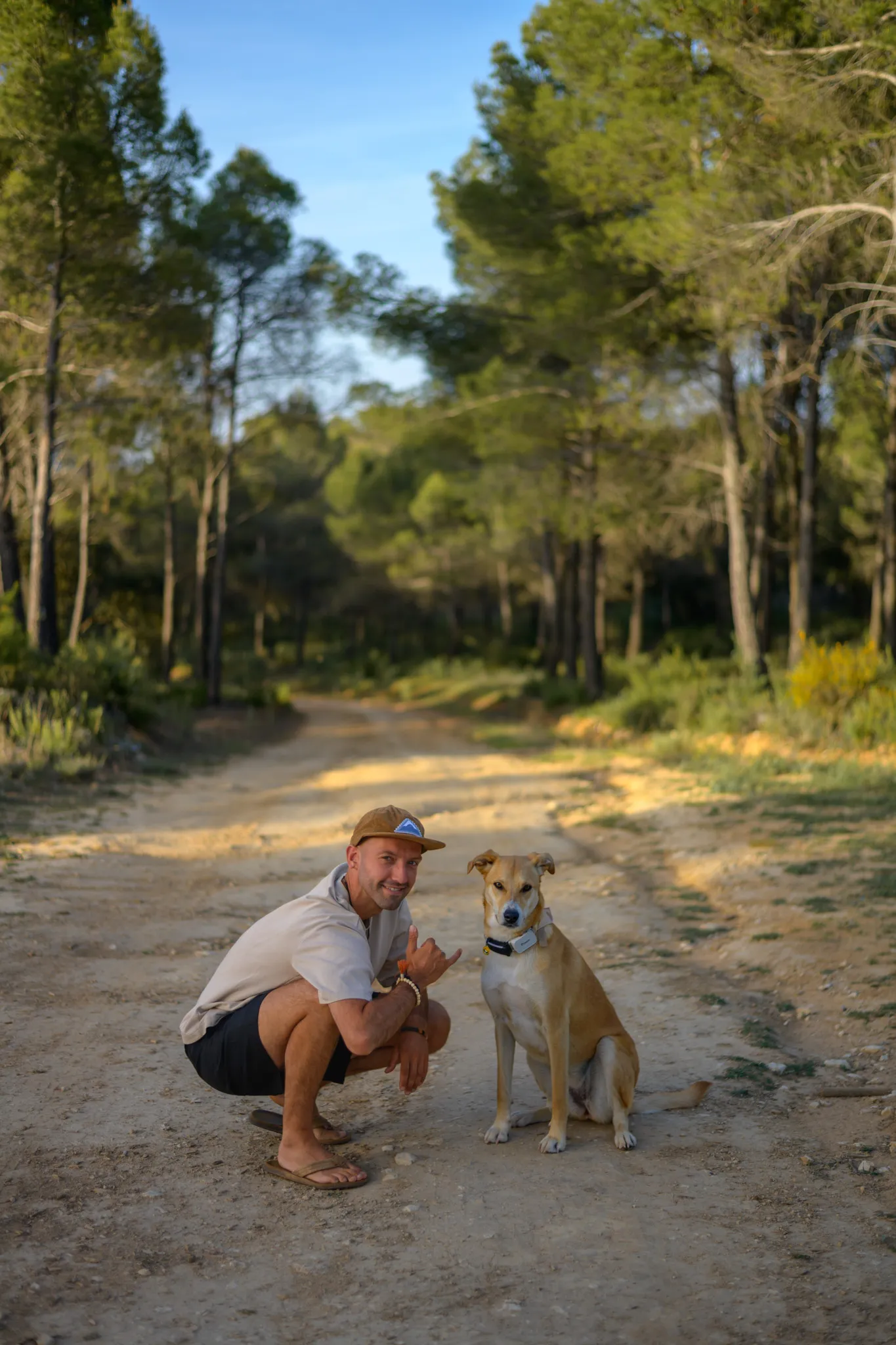
Ik leef het ding dat ik verkoop.
Mijn partner, onze hond Nala en ik reizen door Europa in een camper, met Starlink en een NAS die ik zelf gebouwd heb. Tijd- en plaatsonafhankelijk werken is hier geen belofte op een slide: het is de setup waar ik elke dag van afhankelijk ben. Dus moet hij werken.
De combinatie is het punt: een teamlead die ziet waar processen binnen een echt bedrijf breken, en een bouwer die het daarna wegautomatiseert. De meesten hebben één van de twee helften.
I live the thing I sell.
My partner, our dog Nala and I travel Europe in a camper, with Starlink and a NAS I put together myself. Time and location independence is not a promise on a slide here: it's the setup I depend on every day. So it has to actually work.
The combination is the point: a team lead who sees where processes break inside a real company, and a builder who then goes home and automates it. Most people offering this have one half or the other.
Vier stappen, en je kunt na elke stap stoppen.
Geen jaarcontract voordat je weet of het werkt.
- Gratis intake
We praten over waar je tijd heen gaat en of automatiseren hier hout snijdt. Als het niet zo is, zeg ik dat.
- Audit
Ik meet waar de tijd weglekt en wat het oplevert om dat weg te halen. Je krijgt een concreet voorstel, geen vage bandbreedte.
- Bouw
Gebouwd en getest op echte cases. Grotere gekoppelde systemen duren langer, en dat hoor je vooraf.
- Onderhoud
Ik monitor, repareer en pas aan als je proces verandert. Hier zit het meeste van mijn werk, en daarom werk ik liever op retainer dan per project.
Vragen die ik het vaakst krijg
Wat kost het?
Trajecten starten rond €1.000 per maand en groeien naar €2.500–4.000+ bij vaste klanten. Liever los werk? Dat kan voor €59 per uur, per klus afgerekend. Na de gratis intake krijg je een concreet voorstel, geen bandbreedte.
Hoe snel zie ik resultaat?
De meeste eerste automatiseringen draaien binnen 2 tot 4 weken. Grotere, gekoppelde systemen duren langer. Daar krijg je vooraf een realistische planning voor in plaats van een belofte.
Wat gebeurt er met mijn data?
Die blijft in de systemen die je al gebruikt. Ik bouw met tools die EU-hosting ondersteunen waar dat uitmaakt, en ik zeg vooraf welke delen van een workflow de EU verlaten. Onder de AVG blijf jij verwerkingsverantwoordelijke: dat kan ik niet van je overnemen, wel zorgen dat mijn werk je er niet mee in de problemen brengt.
Four steps, and you can stop after any of them.
No annual contract before you know whether it works.
- Free intake
We talk about where your time goes and whether automation makes sense here. If it doesn't, I'll say so.
- Audit
I map where the time leaks and what removing it returns. You get a concrete proposal, not a vague range.
- Build
Built and tested on real cases. Larger connected systems take longer, and you hear that up front.
- Maintenance
I monitor, fix and adapt as your processes change. This is where most of my work lives, and it's why I prefer retainers over one-off projects.
Questions I get most
What does it cost?
Engagements start around €1,000 per month and grow towards €2,500–4,000+ for established clients. Prefer one-off work? That is €59 per hour, billed per job. After the free intake you get a concrete proposal, not a bracket.
How fast do I see results?
Most first automations are live within 2 to 4 weeks. Bigger, connected systems take longer. You get a realistic timeline for those up front instead of a promise.
What happens to my data?
It stays in the systems you already use. I build with tools that support EU hosting where that matters, and I tell you up front which parts of a workflow leave the EU. Under GDPR you stay the controller: I can't take that off your hands, but I can make sure my work doesn't trip you up on it.
Laten we uitzoeken waar je tijd heen gaat.
Gratis, 30 minuten, geen verkooppraatje. Als automatiseren in jouw situatie niet loont, zeg ik dat in plaats van je iets te verkopen.
Let's find out where your time is going.
Free, 30 minutes, no sales pitch. If automation doesn't make sense in your situation, I'll tell you that instead of selling you something.